

Casino games run on fixed mathematical rules, and understanding those rules is the clearest way to play with realistic expectations. casino-guide.ca is an independent, educational resource for Canadian readers who want to know how casino games actually work — the rules, the odds, the house edge and the terminology — without marketing spin or promises of winning. This page is the starting point: it explains the core ideas behind every game and routes you to detailed guides for slots, blackjack, roulette and the classic table games.
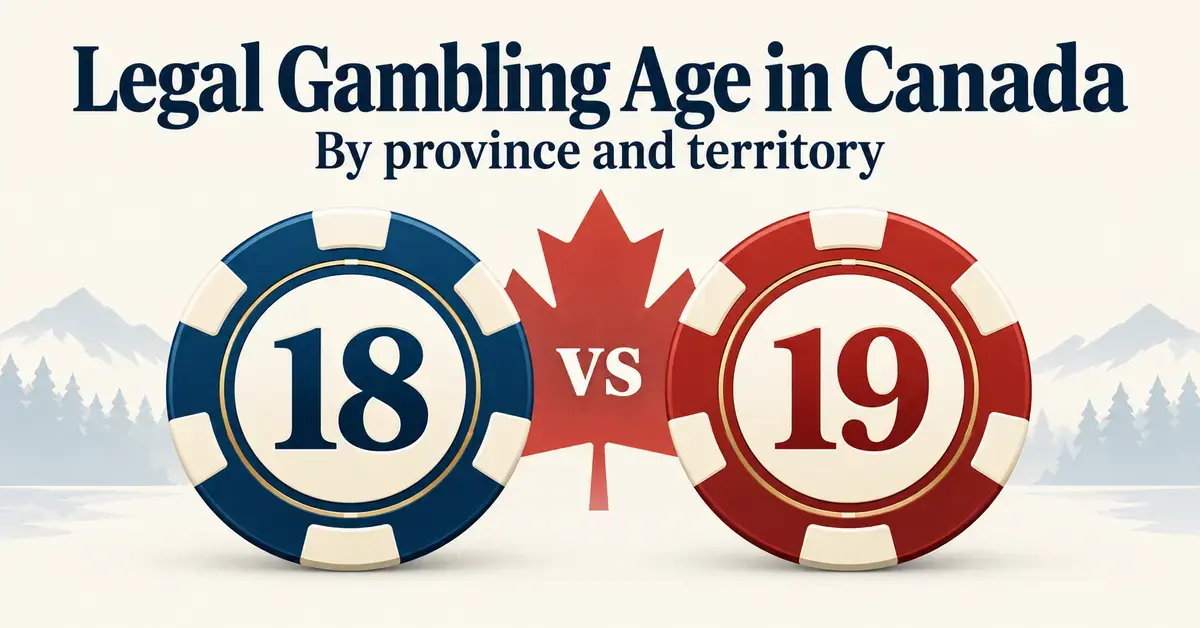
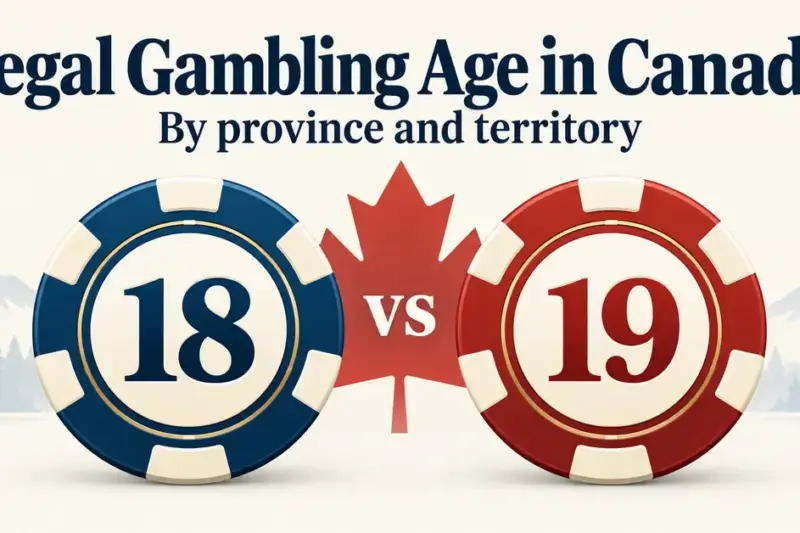
Age and responsibility notice: Gambling in Canada is for adults only. The legal minimum age is 19 in most provinces and territories and 18 in Alberta, Manitoba and Quebec. This site is for information only — it does not host games, take bets, promote operators or guarantee results.
Key Points
- Casino games are governed by fixed math: the house edge gives the casino a built-in long-term advantage on every game.
- Blackjack has one of the lowest house edges (about 0.5% with basic strategy); American roulette (5.26%) and many slots are among the highest.
- RTP is the long-run payback percentage; it says nothing about any single session.
- Outcomes are produced by certified random number generators and are independent — past results never affect the next.
- The legal gambling age in Canada is 19 in most provinces and territories, and 18 in Alberta, Manitoba and Quebec.
- No strategy, system or demo mode can overcome the house edge; gambling is entertainment, not income.
What casino-guide.ca is — and what it is not
casino-guide.ca is a neutral, fact-based reference, not a casino and not a review site. We do not run games, take wagers, hand out tips to “beat” a game or steer you toward any operator. The goal is simpler and more useful: explain how each game is built, what the odds really are, and what the common terms mean, so you can understand what you are looking at. Every figure on the site is checked against published game mathematics and official regulatory sources, and every technical term is explained the first time it appears.
How casino games work: three ideas that explain the rest
Almost everything about casino games comes down to three connected ideas — the house edge, return to player, and the random number generator. Learn these and the rest of the site makes immediate sense.
What is the house edge?
The house edge is the mathematical advantage the casino holds on every bet, expressed as the percentage of each wager it expects to keep over the long run. If a game has a 2% house edge, the casino expects to keep about $2 of every $100 wagered — not from any single bet, but averaged across thousands of them. The edge comes from the rules themselves: payouts are set slightly below the true odds of the event. No betting system, staking plan or demo-mode practice changes the house edge, because the edge is built into the math of the game.
What is RTP (return to player)?
Return to player (RTP) is the house edge seen from the other side: the percentage of all money wagered that a game pays back over the long run. A slot with 96% RTP has a 4% house edge and theoretically returns about 96 cents per dollar wagered — measured across millions of spins, not a single session. In the short term, results swing far above or below that figure, which is why one player can win big on a 96% game while another loses quickly. RTP describes a long-run average; it is never a guarantee for your session.
What are RNGs, and are the games fair?
Modern casino games decide outcomes with a random number generator (RNG) — a continuously running program that produces unpredictable numbers, each mapped to a card, reel position or wheel result. Every spin or deal is independent: the RNG has no memory, so a machine is never “due” for a win and past results never influence the next outcome. In regulated markets, RNGs and advertised RTP figures are tested and certified by independent laboratories before games go live. That is what makes a licensed game fair in the statistical sense — fair meaning genuinely random, not meaning you are likely to win.
Odds versus payouts
Odds and payouts are different things, and the gap between them is where the house edge lives. The true odds describe how likely an outcome is; the payout is what the casino pays when it happens. On a single-number roulette bet, for example, the true odds against winning are 36 to 1 on a European wheel, but the payout is only 35 to 1 — that difference is the casino’s margin. Learning to read this gap for each game is the heart of understanding casino odds.
Casino Game Odds Comparison
| Game / bet | Typical house edge | Notes |
|---|---|---|
| Blackjack (basic strategy) | ~0.5% (as low as 0.28%) | Lowest edge; depends heavily on house rules |
| Baccarat — Banker | 1.06% | Best bet in baccarat, after commission |
| Baccarat — Player | 1.24% | Close second |
| Craps — Pass / Come | 1.41% | Don’t Pass is slightly lower at 1.36% |
| European roulette (single zero) | 2.70% | One green zero |
| American roulette (double zero) | 5.26% | The extra 00 roughly doubles the edge |
| Slots | ~2%–10% | Varies by machine; RTP usually about 90%–98% |
| Baccarat — Tie | 14%+ | Avoid; one of the worst bets on the floor |
House-edge figures assume optimal or near-optimal strategy. Source: Wizard of Odds.
The main games, explained
The site is organised around five core guides, each covering one game or family of games in depth. The short introductions below explain what each pillar covers; follow the matching guide for full rules, basic strategy and worked examples.
How casino games work
Start here if you are new. The foundations guide expands on house edge, RTP, RNGs, volatility and bankroll basics, and defines the vocabulary — wager, payout, odds, variance — that the rest of the site uses. It is the plain-language groundwork for every other page.
How slot machines work
Slots are the most played casino games — among the easiest to start and the hardest to truly understand. The slots guide explains reels, paylines, RTP and volatility, bonus features, and why every spin is independent. House edges on slots typically run from about 2% to 10% (RTP roughly 90% to 98%), noticeably higher than the main table games.
How to play blackjack
Blackjack offers one of the lowest house edges in the casino — around 0.5% with correct basic strategy under common rules. The blackjack guide covers the goal (beat the dealer without going over 21), the value of each card, the player choices of hit, stand, double and split, and how rule variations shift the odds for or against you.
How to play roulette
Roulette is a wheel-and-ball game of straightforward bets and clear odds. The roulette guide explains inside and outside bets and their payouts, and the single most important choice a player makes: European (single-zero) wheels carry a 2.70% house edge, while American (double-zero) wheels roughly double it to 5.26%.
Casino table games
Beyond blackjack and roulette sit the other classics — baccarat, craps and poker-based games. The table games guide compares their rules and house edges, from baccarat’s low 1.06% Banker bet to the craps 1.41% Pass Line, and flags the high-edge bets, such as baccarat’s Tie at over 14%, that look tempting but cost the most.
Is casino gambling legal in Canada?
Regulated casino gambling is legal in Canada, and it is organised province by province rather than nationally. Under the Criminal Code, each province and territory conducts and manages its own gambling, usually through a provincial body such as OLG (Ontario), BCLC (British Columbia) or Loto-Québec. Ontario went further by opening a competitive regulated online market on 4 April 2022, overseen by the Alcohol and Gaming Commission of Ontario (AGCO) and its subsidiary iGaming Ontario; Alberta passed its own iGaming Act in 2025 to launch a similar model. The practical points for players are simple: use only operators licensed in your province, and meet the minimum age — 19 in most provinces and territories, or 18 in Alberta, Manitoba and Quebec.
Common mistakes and misconceptions
Most costly casino mistakes come from misunderstanding the math, not from bad luck. The most common ones:
- Believing a result is “due.” Each spin, roll or deal is independent; a red streak in roulette does not make black more likely. This is the gambler’s fallacy.
- Thinking a machine turns “hot” or “cold.” RNGs have no memory, so a slot is never overdue to pay and never needs cooling off.
- Expecting betting systems to win. Systems such as the Martingale change how bets are sized, not the odds, so they cannot overcome the house edge.
- Chasing losses. Increasing bets to “win it back” raises your exposure, not your chances, and is the fastest route to large losses.
- Confusing RTP with your session. A 96% RTP describes millions of plays, not the next hour.
- Taking the worst bets. Baccarat’s Tie, American roulette and most slot side bets carry some of the highest edges on the floor.
- Assuming demo or free play improves real odds. Practice helps you learn the rules, but it never changes the built-in house edge.
Who this guide is for
This guide is written for Canadian adults who want to understand casino games before — or instead of — playing them. That includes complete beginners learning the rules, curious readers who want to know what the odds really are, and anyone tired of marketing language that hides the math. We explain every technical term on first use, use plain numbers rather than hype, and never tell you to gamble or where to gamble. If you only read one thing, make it the house-edge and RTP sections above.
Responsible gambling
Gambling is entertainment with a built-in cost: the house edge means the odds always favour the casino over time, so never wager money you cannot afford to lose and never treat gambling as a way to make money. Set time and money limits before you play, take regular breaks, and avoid chasing losses. If gambling stops feeling like fun, free and confidential help is available across Canada.
In Ontario, ConnexOntario offers 24/7 support at 1-866-531-2600, and the Responsible Gambling Council provides national resources and self-assessment tools. Most provinces also run self-exclusion programs that let you block your own access to gambling for a set period.
Sources
Frequently Asked Questions (FAQ)
Which casino game has the best odds?
Blackjack has the lowest house edge of the common casino games — about 0.5% with correct basic strategy, and as low as 0.28% under liberal rules. Baccarat’s Banker bet (1.06%) and the craps Pass Line (1.41%) are also among the better odds. Slots and American roulette (5.26%) sit at the higher-edge end.
What does RTP mean?
RTP (return to player) is the percentage of all wagered money a game pays back over the long run. A 96% RTP game returns about 96 cents per dollar across millions of plays, leaving a 4% house edge. It is a long-run average and tells you nothing about what will happen in a single session.
Are online casino games rigged?
Licensed online casino games are not rigged, but they are designed with a house edge. Outcomes come from random number generators that are tested and certified by independent labs in regulated markets such as Ontario. “Fair” means the results are genuinely random — it does not mean you are likely to win, because the built-in edge still favours the casino.
How old do you have to be to gamble in Canada?
You must be 19 in most provinces and territories, including Ontario, British Columbia, Nova Scotia and Saskatchewan, and 18 in Alberta, Manitoba and Quebec. Some provinces allow lottery purchases at 18 even where casino play requires 19.
Can a betting system beat the house edge?
No. Systems such as the Martingale change how your bets are sized but not the underlying odds, so they cannot overcome the house edge over time. They can produce short winning streaks, but they also risk large, fast losses. No system, strategy or practice mode removes the mathematical advantage built into each game.